-
dazemoonmarketing
- September 10, 2026
- No Comments
Author’s Note: This guide is based on practical natural-stone selection and maintenance principles commonly considered by architects, interior designers, builders, and marble professionals. Marble is a natural material, and its suitability depends on the specific variety, finish, installation method, and level of maintenance. Buyers should inspect actual slabs and confirm technical suitability before final installation.
Table of Contents
- Introduction
- Can Marble Be Used in Kitchens?
- Can Marble Be Used in Bathrooms?
- Benefits and Limitations of Marble
- How to Choose the Right Marble
- Conclusion
- FAQs
Introduction
Marble is widely associated with luxury interiors, elegant flooring, and premium architectural spaces. But many homeowners have an important question before selecting natural stone for functional areas: Can marble be used in kitchens and bathrooms?
The answer is yes. Marble can be successfully used in both kitchens and bathrooms when the right variety is selected, installed professionally, and maintained correctly. However, these spaces have different requirements. Kitchens are exposed to food spills, oils, acids, and heat, while bathrooms experience moisture, water exposure, soaps, and cleaning products.
Understanding these differences is essential before investing in marble. A reliable Marble supplier in Kishangarh can help homeowners compare different varieties according to their intended application and maintenance requirements.
Can Marble Be Used in Kitchens?
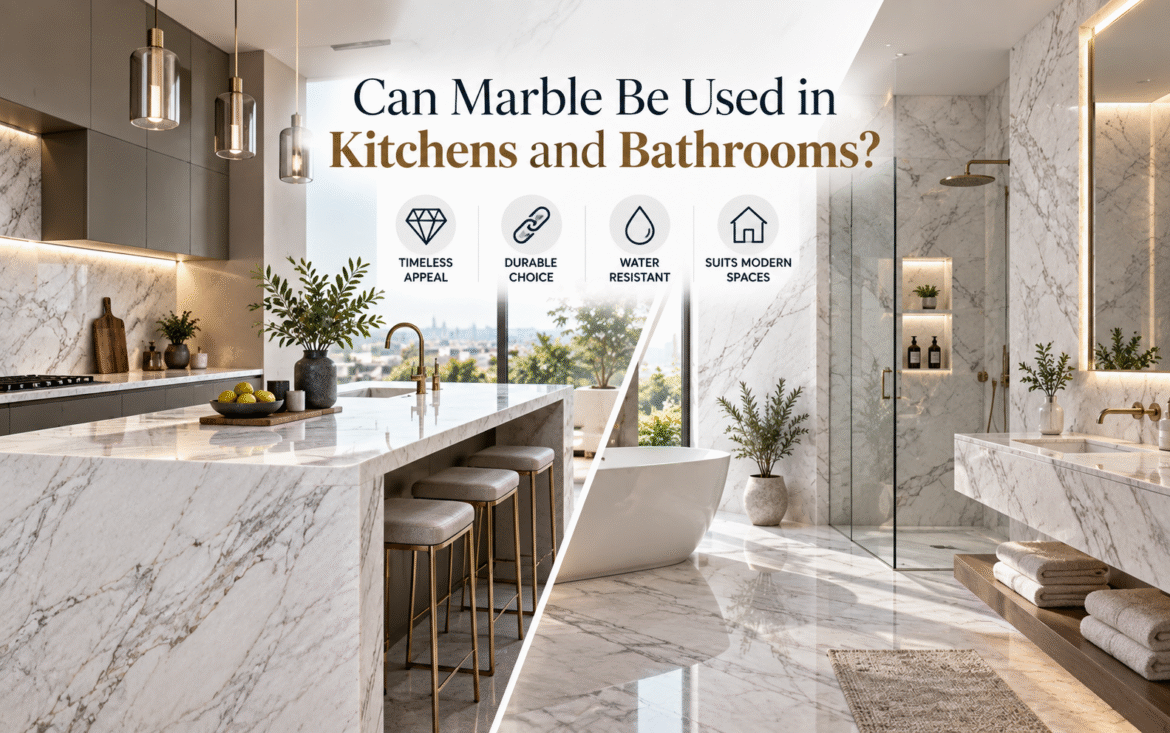
Marble can create a sophisticated and luxurious kitchen, especially when used for countertops, backsplashes, flooring, and feature surfaces. Its natural veining makes every installation unique, giving kitchens a distinctive appearance that manufactured materials cannot completely replicate.
Marble Countertops
Marble countertops are popular in luxury homes because of their elegant appearance. However, homeowners should understand that marble is a natural stone and can react to acidic substances such as lemon juice, vinegar, and certain food products.
Acidic spills may cause etching, particularly on polished surfaces. This does not necessarily mean marble cannot be used in kitchens, but it does mean that homeowners should be prepared for regular care.
Prompt cleaning of spills and the use of appropriate stone-care products can help protect the surface.
Marble Backsplashes
Marble is an excellent option for kitchen backsplashes because it provides strong visual impact while generally receiving less direct wear than countertops.
Bookmatched marble backsplashes can create a dramatic focal point in modern luxury kitchens. Light-colored varieties can also make the kitchen appear brighter and more spacious.
Homeowners looking for Italian marble in Kishangarh can explore different slab patterns to create coordinated countertops and backsplashes.
Marble Kitchen Flooring
Marble flooring can work beautifully in spacious kitchens, particularly in luxury residences. However, the finish should be selected carefully because polished marble may become slippery when wet.
A suitable finish and professional installation can improve practicality while maintaining the stone’s elegant appearance.
Can Marble Be Used in Bathrooms?
Bathrooms are one of the most popular applications for marble. From luxury hotels to premium residences, marble is commonly used for floors, walls, vanity tops, shower surrounds, and decorative features.
Marble Walls
Marble wall cladding is particularly suitable for bathrooms because it creates a seamless and luxurious appearance. Large-format slabs can reduce visible joints and make smaller bathrooms feel more spacious.
Marble Vanity Tops
Marble vanity tops can add elegance to bathrooms and are generally practical when properly sealed and maintained. Since cosmetics, soaps, and cleaning products may come into contact with the surface, spills should be cleaned promptly.
Marble Bathroom Flooring
Marble can also be used for bathroom flooring. For wet areas, homeowners should consider slip resistance and choose a finish appropriate for the location.
A knowledgeable Marble dealer in Kishangarh can provide guidance on suitable finishes and varieties for different bathroom applications.
Benefits and Limitations of Marble
Benefits
Timeless appearance: Marble has been used in architecture for centuries and remains relevant across changing interior trends.
Natural uniqueness: Every slab has its own color, veining, and mineral movement.
Design versatility: Marble can be used for countertops, walls, floors, vanities, staircases, and decorative features.
Luxury appeal: Premium natural stone can significantly enhance the visual character of kitchens and bathrooms.
Visiting a Best marble shop in Kishangarh allows buyers to inspect full slabs and understand how natural patterns will appear across larger installations.
Limitations
Marble requires more attention than some engineered surfaces. It can be susceptible to staining or etching if spills are ignored, and certain cleaning products can damage the surface.
Marble is also naturally porous, which is why appropriate sealing is important. The frequency and type of sealing depend on the specific stone, finish, and application.
These characteristics should not discourage homeowners from choosing marble. Instead, they should help buyers make an informed decision about whether the material suits their lifestyle.
How to Choose the Right Marble
The best marble depends on where it will be installed.
For a kitchen backsplash or bathroom feature wall, dramatic veining may be the primary consideration. For countertops and floors, homeowners should also consider maintenance, finish, porosity, and daily usage.
A trusted Premium marble supplier india can help buyers understand the practical differences between marble varieties and recommend suitable options based on the intended application.
For homeowners planning high-end interiors, comparing collections from the Best Italian marble in Kishangarh can provide access to premium varieties with distinctive colors and natural veining.
Those exploring materials from multiple international sources can also evaluate the Best Imported marble in india by considering quality, origin, technical suitability, appearance, and long-term maintenance rather than choosing solely based on price.
Professional installation is equally important. Proper substrate preparation, adhesive selection, waterproofing where required, sealing, and finishing all influence how marble performs over time.
Conclusion
Yes, marble can be used successfully in both kitchens and bathrooms. It remains one of the most elegant choices for homeowners who want natural beauty and a premium architectural finish.
However, marble is best suited to homeowners who understand its natural characteristics and are willing to provide appropriate care. Kitchens require attention to acidic spills and food stains, while bathrooms require suitable sealing, cleaning, and slip-conscious finish selection.
When selected carefully and installed professionally, marble can create kitchens and bathrooms that remain visually impressive for many years.
Frequently Asked Questions
1. Is marble good for kitchen countertops?
Yes, marble can be used for kitchen countertops, particularly in luxury interiors. However, it requires regular care because acidic substances and spills can cause staining or etching.
2. Can marble be used inside showers?
Marble can be used for shower walls and surrounds when installed correctly with appropriate waterproofing and sealing. The specific marble and finish should be selected according to the wet-area application.
3. Is marble slippery in bathrooms?
Highly polished marble can become slippery when wet. For bathroom floors and wet areas, homeowners should consider finishes that provide better slip resistance.
4. How often should marble be sealed?
The sealing schedule depends on the marble variety, finish, location, and level of use. Follow recommendations provided by the stone supplier and professional installer.
5. What cleaners should be used on marble?
Use cleaners specifically designed for natural stone or pH-neutral products. Avoid acidic or harsh chemical cleaners, as they can damage or dull marble surfaces.