-
dazemoonmarketing
- June 1, 2026
- No Comments
Table of Contents
- Introduction
- Why Marble Thickness Matters
- Standard Marble Thickness Options
- Choosing Marble Thickness for Flooring
- Choosing Marble Thickness for Walls
- Factors to Consider Before Selecting Thickness
- Tips for Sourcing and Installation
- Conclusion
- FAQs
1. Introduction
Selecting the right marble is about more than choosing a beautiful color or pattern. One of the most important yet often overlooked factors is marble thickness. The thickness of a marble slab directly affects its durability, appearance, installation process, and overall project cost.
Whether you are designing a luxury home, commercial space, or renovation project, understanding marble thickness can help you make a smarter investment. Many homeowners and professionals visit a Premium marble showroom in India to compare slab specifications and determine the ideal thickness for different applications.
2. Why Marble Thickness Matters
Marble thickness plays a significant role in both functionality and aesthetics. Choosing the wrong thickness can lead to structural issues, installation challenges, and increased maintenance costs.
Benefits of Selecting the Right Thickness
- Improves durability and longevity
- Enhances load-bearing capacity
- Reduces the risk of cracks and breakage
- Creates a premium and balanced appearance
- Supports proper installation techniques
An exclusive Italian Marble Collection often includes slabs in various thicknesses, allowing architects and homeowners to select the most suitable option for each project.
3. Standard Marble Thickness Options
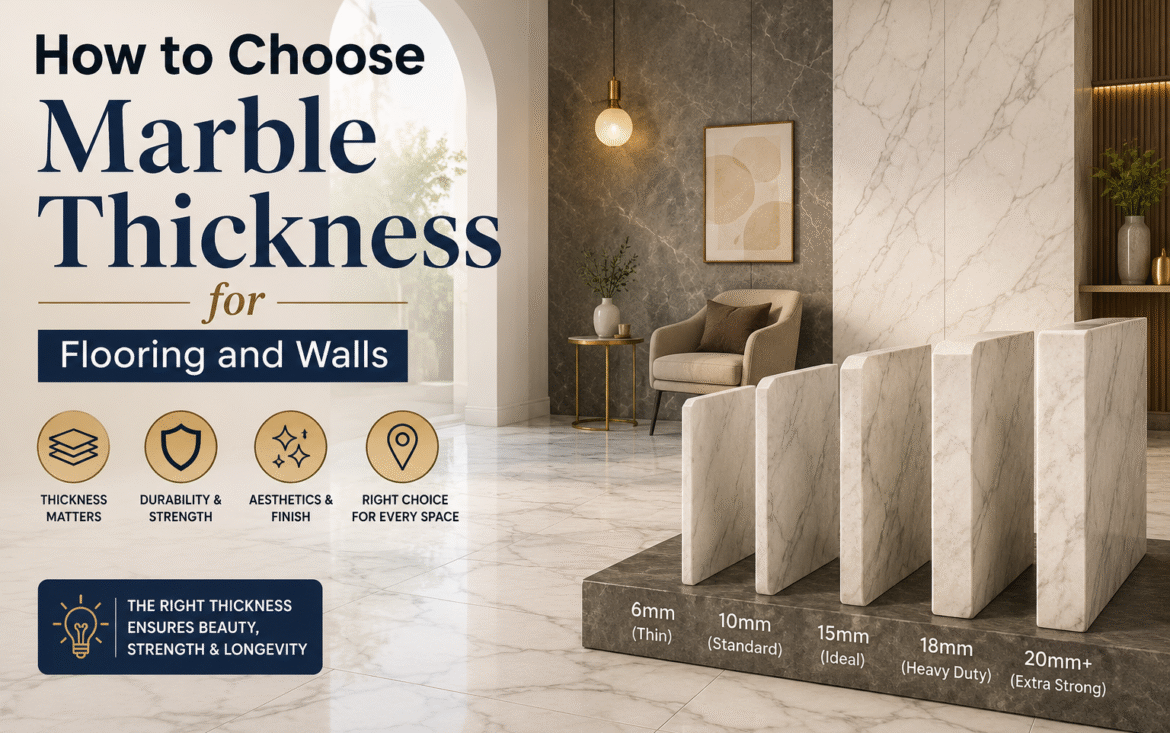
Marble is generally available in several standard thicknesses:
16–18 mm Marble
This thickness is commonly used for wall cladding and decorative applications where heavy load-bearing capacity is not required.
18–20 mm Marble
One of the most popular options for residential flooring. It offers a good balance between durability and cost.
20–30 mm Marble
Typically used for premium flooring, staircases, countertops, and high-traffic commercial areas.
Above 30 mm Marble
Usually reserved for luxury architectural features, large countertops, and custom applications requiring additional strength.
Many homeowners choose to Buy imported marble online in India to compare slab dimensions and thickness options before making a purchase decision.
4. Choosing Marble Thickness for Flooring
Flooring experiences continuous foot traffic and therefore requires sufficient strength and durability.
Residential Flooring
For homes, marble thickness between 18 mm and 20 mm is generally considered ideal. It provides durability while maintaining a refined appearance.
Luxury Villas and Premium Homes
Luxury properties often use thicker marble slabs to achieve a more seamless and luxurious look. Larger slabs with greater thickness also help reduce visible joints.
Commercial Flooring
Hotels, office lobbies, and shopping centers typically require thicker marble due to higher foot traffic and heavier loads.
Builders working on premium developments frequently select Luxury Marble for Builders because thicker slabs offer enhanced durability and long-term performance.
5. Choosing Marble Thickness for Walls
Wall cladding has different structural requirements compared to flooring.
Interior Feature Walls
For decorative walls, marble thickness between 16 mm and 18 mm is usually sufficient. This provides the desired aesthetic effect without adding unnecessary weight.
Bathroom Walls
Moisture-resistant installation systems combined with medium-thickness marble create durable and elegant bathroom surfaces.
Exterior Cladding
Exterior walls may require thicker marble and specialized installation methods to withstand environmental conditions.
Premium marble markets such as Italian marble Kishangarh offer a wide range of wall-cladding options suitable for residential and commercial applications.
6. Factors to Consider Before Selecting Thickness
Project Type
The purpose of the marble installation should be the first consideration. Flooring, walls, staircases, and countertops all require different thickness levels.
Marble Variety
Some marble varieties are naturally denser and stronger than others, allowing them to perform well even at lower thicknesses.
Slab Size
Larger slabs often benefit from additional thickness to maintain stability and reduce the risk of cracking.
Budget
Thicker marble generally costs more due to increased material usage and transportation expenses. However, the added durability often justifies the investment.
Installation Method
The chosen installation technique can influence the thickness requirement. Professional installers can recommend the best option based on the project specifications.
7. Tips for Sourcing and Installation
Selecting high-quality marble is just as important as choosing the correct thickness.
When sourcing marble, consider:
- Consistency in slab thickness
- Proper finishing and polishing
- Authenticity of imported material
- Supplier reputation and expertise
Many professionals rely on the Best imported marble supplier in India to ensure consistent quality and accurate slab specifications.
For premium projects, suppliers offering Best Italian marble Kishangarh provide a wide selection of marble varieties in different thicknesses, helping homeowners and architects find the ideal solution for their design goals.
Working with experienced installers is equally important, as proper installation maximizes the performance and lifespan of the marble.
8. Conclusion
Choosing the right marble thickness is a crucial step in achieving a successful and long-lasting installation. Flooring generally requires thicker marble for durability, while wall applications can often use thinner slabs without compromising aesthetics.
By considering factors such as project type, slab size, traffic levels, and installation methods, homeowners and designers can make informed decisions that balance beauty, performance, and cost. Investing in high-quality marble and professional installation ensures that your interiors remain elegant and durable for years to come.
9. FAQs
1. What is the standard marble thickness for flooring?
Most residential flooring projects use marble with a thickness of 18 mm to 20 mm.
2. Which marble thickness is best for wall cladding?
Marble thickness between 16 mm and 18 mm is commonly used for interior wall applications.
3. Does thicker marble last longer?
Generally, thicker marble offers better durability and resistance to damage, especially in high-traffic areas.
4. Is thicker marble more expensive?
Yes, thicker slabs usually cost more because they require additional material and handling.
5. Can thin marble be used for flooring?
Thin marble is generally not recommended for flooring unless supported by specialized installation systems.